Generally, Minimalist design is a visual presentation that focuses on prioritising the essential. Taken and stripped down to its core function there is a focus on simplicity, clean lines and a monochromatic colour scheme with an emphasis on the use of negative space (Hohenadel 2022).
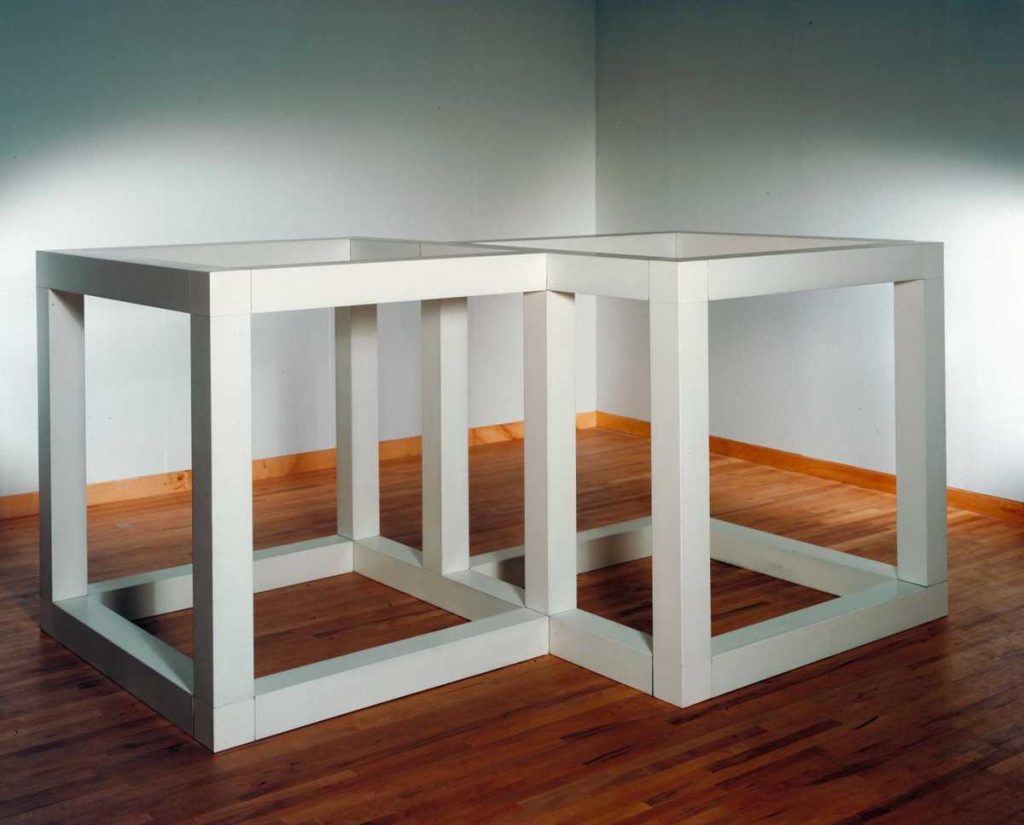
An observation of the piece “Two Open Modular Cubes/Half-Off (1972)” by Sol Lewitt offers some reinforcement of this idea. With the piece being an arguably simplistic construction of wooden cubes, arranged in a way that offers a more complex viewing. It does not mask itself as a symbol or idea other than that it exists as it is. An important acknowledgement comes in the appreciation of how the whole piece is strong as it works in unison with each specific detail. The negative space offers windows into the world surrounding it incorporating it into the art of the design. On a grander scale there is a way to see this minimalist design applied to buildings and architecture, showing there is an influence into the modern world.
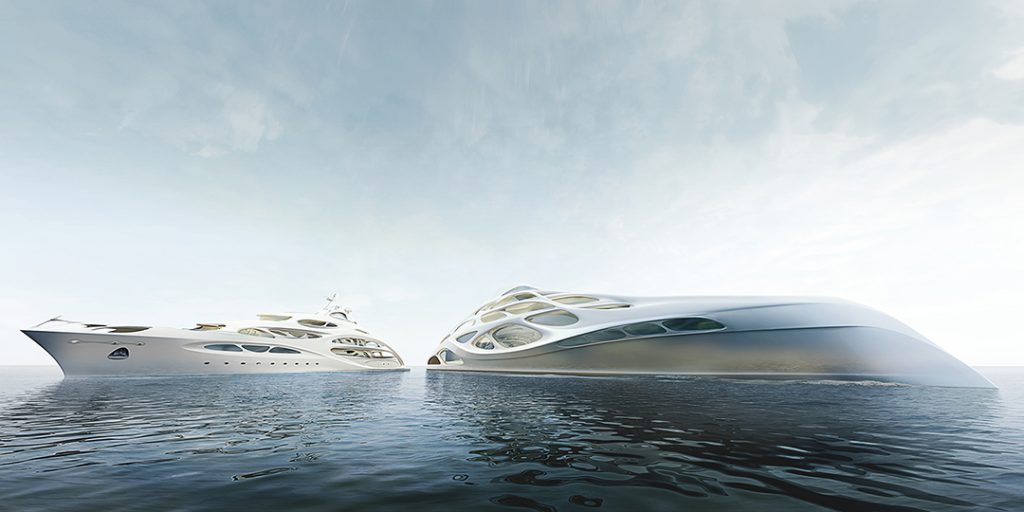
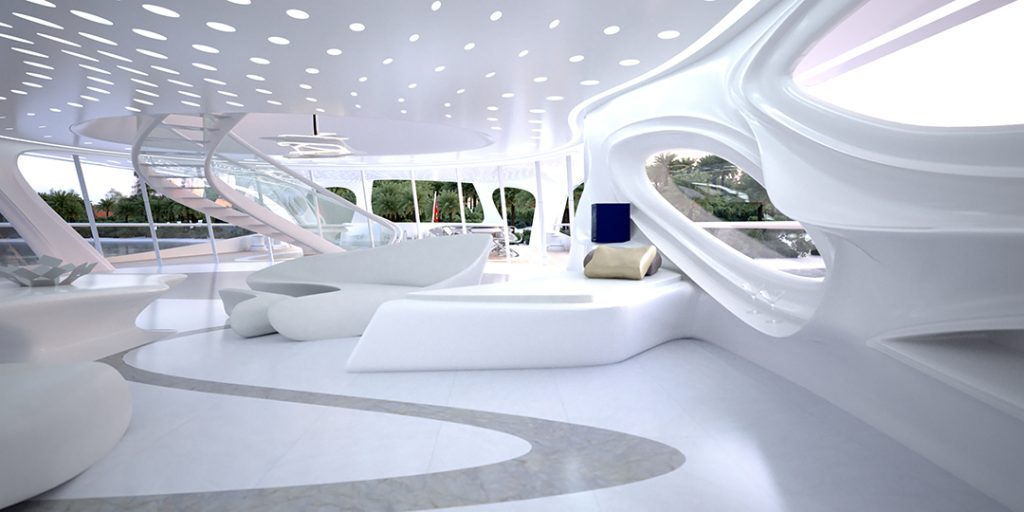
Described as having her mind on the broader picture, Zaha Hadid was an architect whose works had an imperative role in modern urban imagery. Through an exploration of her work, there are a large number of iconic buildings that have a distinctive architectural form (Hadid 2002). Using the reference of the Unique circle yacht there is a minimalist design being presented. The use of abstract shapes and lines provide a cohesive visual of the full piece, which is particularly noticeable by observing the small details of the design and how individually they lack the detail to portray their purpose by themselves; in the combination of the full set does the true knowledge of how it all fits together reveal itself.
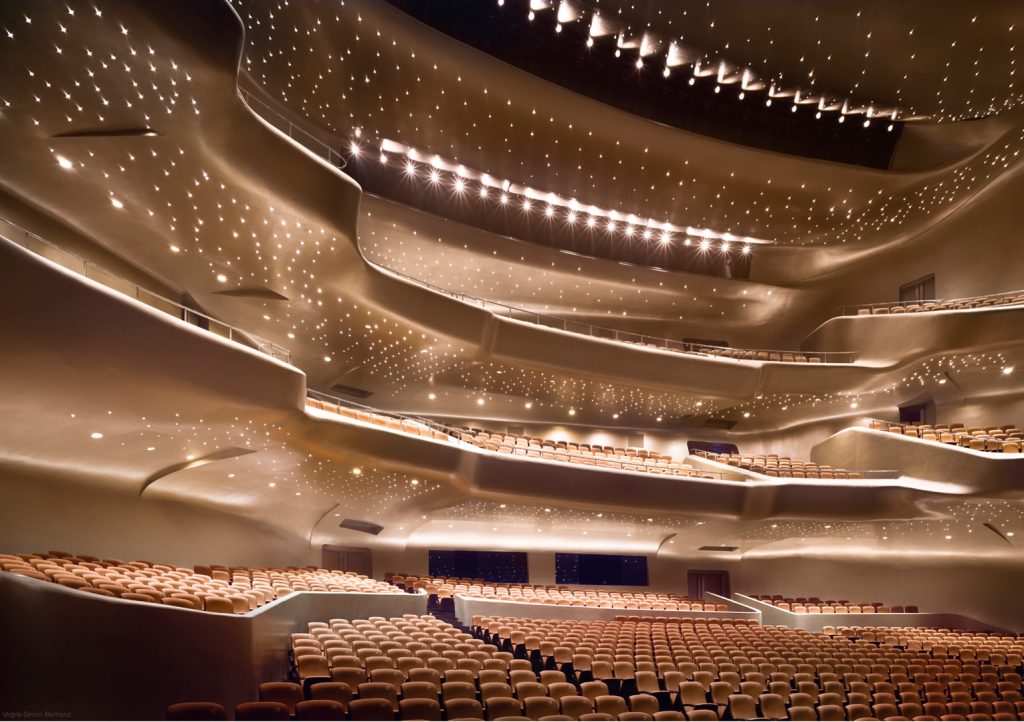
An understanding of the impact of this work is needed to iterate the relevance of its place in society. The act of rebelling against conformity is something that can be attributed to a variety of different artists and designers throughout history. It is reasonable to assume a key success and iconicity of Zaha Hadid’s designs can be attributed to the notion of contradiction ( Youns 2017). A thought that can be explored through analysis of her design of the Guangzhou Opera House, The presentation of curved lines defining the shape while also providing an illusion that the whole building is carved from a solid object, the natural flow of the walls that blend into the upper stands both defines and hides the detail, while serving functionality at no expense. The monochromatic colour scheme allows the colour highlights to provide extra detail within the folded texture of the building. Small circular lights decorate the ceilings, offering a visual mirror of a night sky, it could be argued that it represents the natural beauty of a night sky visual within the context of a building as a way to subconsciously associate the environment together.

References
Bertrand, S, V. (N.D) Zaha Hadid “Guangzhou Opera House” (Photo) Available Online Zaha Hadid Architects https://www.zaha-hadid.com/wp-content/uploads/2019/12/1062_guangzhou68.jpg

Hadid, Z., 2002. Zaha Hadid. ICA.
Hohenadel, K. 2022 What is Minimalist Design? Available Online https://www.thespruce.com/what-is-minimalist-design-4796583 [Accessed 18/06/2023]
Lewitt, S. (1972) “Two Open Modular Cubes/Half-Off” (Photo) Available Online. Tate. https://www.tate.org.uk/art/art-terms/m/minimalism
Moka Studio (N.D) Zaha Hadid “Unique Circle Yachts) (Photo) Available Online Zaha Hadid Architects https://www.zaha-hadid.com/wp-content/uploads/2019/12/zha_bv_maindeck_interior1_white.jpg

Moka Studio (N.D) Zaha Hadid “Unique Circle Yachts) (Photo) Available Online Zaha Hadid Architects https://www.zaha-hadid.com/wp-content/uploads/2019/12/zha_bv_twinview.jpg

Youns, A.M., 2017. A Systematic Analysis of Formative Design Ideas of Zaha Hadid (Master’s thesis, Eastern Mediterranean University EMU-Doğu Akdeniz Üniversitesi (DAÜ)).