Conceptual Energy Drink Brand Logo
During this assignment the focus was placed on attempting to create an energy drink brand that has a target audience of people over the age of 60. It is stated that the target demographic group is teenagers and young adults aged 18-34 years old (Heckman et al 2010) to understand the relevance of this is to analyse the current packaging standards to incorporate an alternative brand to reach this new target demographic. By looking at this collection of currently existing energy drinks it is possible to see a general theme across the board; bright colours, “punchy” slogans, symbolic mascots and bold energetic fonts. All of these factors combined provide a stereotypical visual palette that enforces the target audience that currently exists. The current packaging is a traditional aluminium can with a few exceptions for certain products such as Sneak™ and Prime™ plastic based sachets and bottles are used within these and similar products. While analysing these existing brands, it is clear to see how their target audiences are reached. A key focus within these brands and their advertising and marketing strategies is to provide the audience with a reason to consume these products, certain energy drinks will market themselves for everyday people to get things done; appealing to the notion of providing motivation and the ability for people to achieve their goals while sports drinks insinuate the idea of being healthier than typical fizzy drinks (Bleakley et al 2022). These logos and brand names will often use singular and catchy titles, that more often than not do not relate to anything within the drink, but within combination of slogans and imagery provide a unique and memorable correlation between the identity and the product. In designing a new brand for an energy drink the consideration for how to reach the target audience and appeal to them is the key component to success. An initial idea with this is to combine the thoughts and feelings of that audience today, with the nostalgia of times from their youth, as a way to appeal to that instinct to consume the product. Generally speaking people over the age of 60 are usually working less if at all and would have more free time to enjoy themselves. Based on this graph from Ageing Better (2022) it shows that in the last few years there has begun a steady climb as more people over the age of 60 have become inactive from work over the last few years. To this note it becomes important that targeting these groups’ needs “to get things done” may become less prevalent and instead it should be wise to find a different path or marketing. Aiming at the nostalgia factor that has been known to encompass masses of people. Rousseau and Venter (1999) wrote that nostalgia not only influences consumers’ present but that nostalgic consumers represent an important market segment. Establishing this as the route this brand will take arrives at the conclusion of researching typical brands or styles of older drinks that could resonate with this nostalgia feeling that is aiming to be achieved, from this there is a sample of images to begin understanding what would be needed to imitate this style. On this the final design of the logo comes with the name James Johnson’s Vigor Elixir, chosen as a homage to older medicinal bottles and in comparison to bottles of alcohol that became famous for their advertising and graphic design. The logo simply takes the letter J and uses a two toned version to achieve a 3D effect, while also providing the double J visual from the product name. Finally the design of the J is to mimic an arm and a bulging muscle as a way to reinforce the idea of a strengthening elixir, to match the name Vigor.
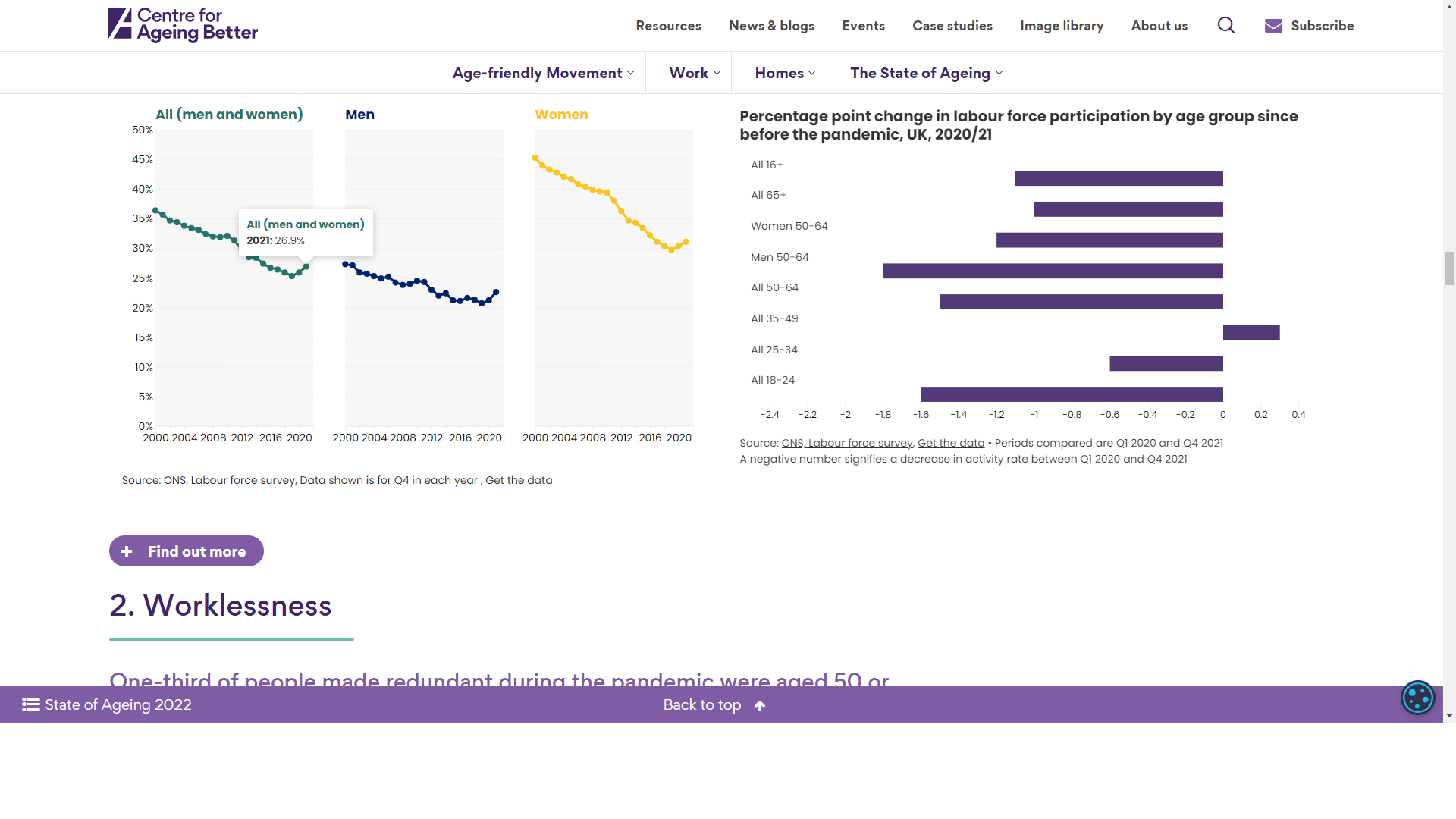
Showing the decline in the workforce of older people. Trying to target a mature workforce may seem less fruitful following this data
In designing a new brand for an energy drink the consideration for how to reach the target audience and appeal to them is the key component to success. An initial idea with this is to combine the thoughts and feelings of that audience today, with the nostalgia of times from their youth, as a way to appeal to that instinct to consume the product. Generally speaking people over the age of 60 are usually working less if at all and would have more free time to enjoy themselves. Based on this graph from Ageing Better (2022) it shows that in the last few years there has begun a steady climb as more people over the age of 60 have become inactive from work over the last few years. To this note it becomes important that targeting these groups’ needs “to get things done” may become less prevalent and instead it should be wise to find a different path or marketing. Aiming at the nostalgia factor that has been known to encompass masses of people. Rousseau and Venter (1999) wrote that nostalgia not only influences consumers’ present but that nostalgic consumers represent an important market segment. Establishing this as the route this brand will take arrives at the conclusion of researching typical brands or styles of older drinks that could resonate with this nostalgia feeling that is aiming to be achieved, from this there is a sample of images to begin understanding what would be needed to imitate this style. On this the final design of the logo comes with the name James Johnson’s Vigor Elixir, chosen as a homage to older medicinal bottles and in comparison to bottles of alcohol that became famous for their advertising and graphic design. The logo simply takes the letter J and uses a two toned version to achieve a 3D effect, while also providing the double J visual from the product name. Finally the design of the J is to mimic an arm and a bulging muscle as a way to reinforce the idea of a strengthening elixir, to match the name Vigor.

References

Bleakley, A., Ellithorpe, M. E., Jordan, A. B., Hennessy, M., & Stevens, R. (2022). A content analysis of sports and energy drink advertising. Appetite, 174, 106010. https://doi.org/10.1016/j.appet.2022.106010


Centre for Better Ageing. 2022. The state of ageing 2022. https://ageing-better.org.uk/work-state-ageing-2022 Available Online [Accessed 23/03/2024]


Heckman, M.A., Sherry, K. and De Mejia, E.G., 2010. Energy drinks: an assessment of their market size, consumer demographics, ingredient profile, functionality, and regulations in the United States. Comprehensive Reviews in food science and food safety, 9(3), pp.303-317.


Rousseau, G.G. and Venter, D.J.L., 1999. The influence of nostalgia on consumer preference. SA Journal of Industrial Psychology, 25(1), pp.36-42.