Immersive User Experience (UX) and Augmented Reality (AR)
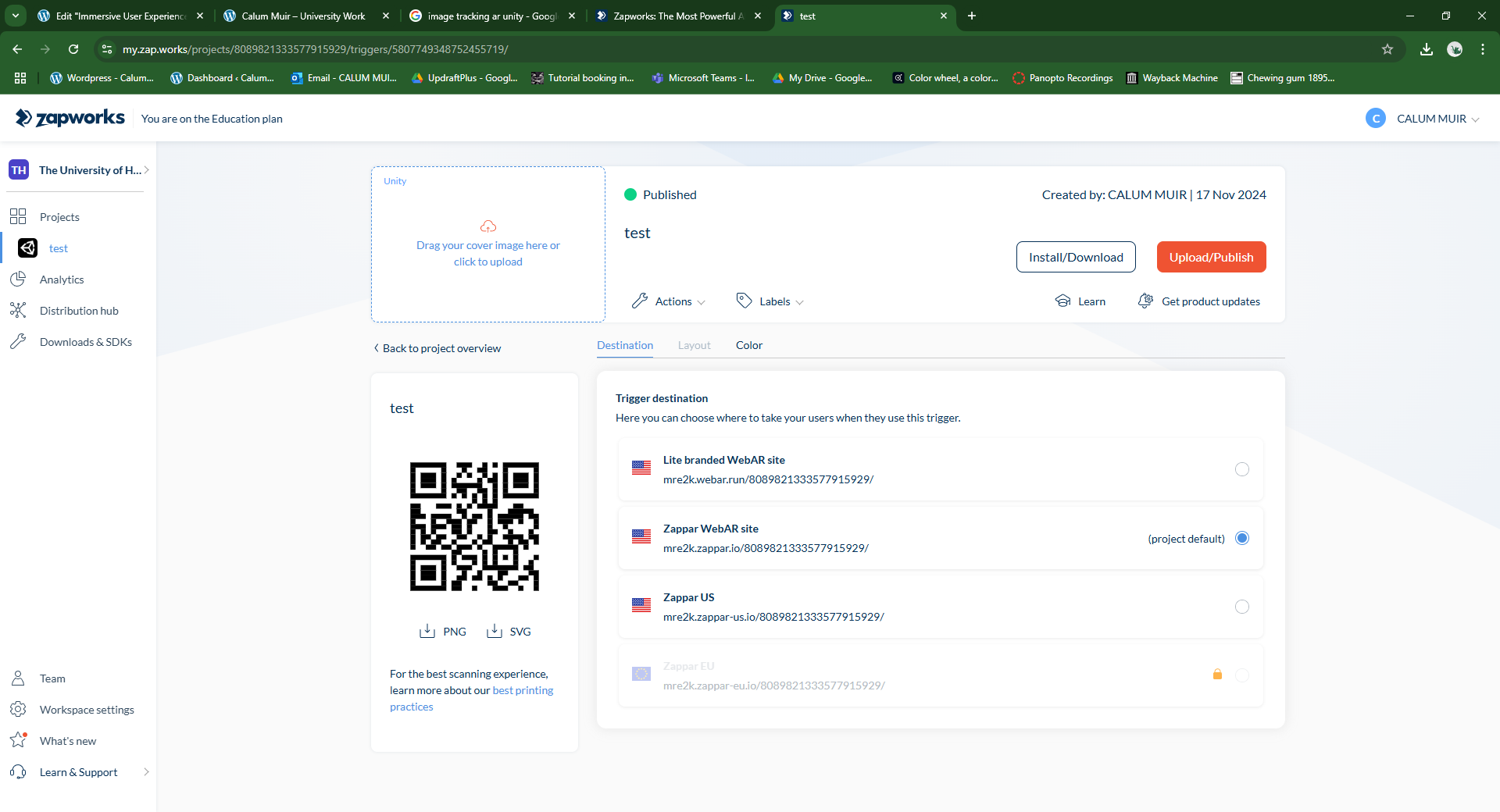
*Author note – There was an issue with the publishing of the AR images on Zapworks so the final product images are unavailable
Another example of how Extended reality can be used to enhance user experience is that of Augmented Reality (AR). AR is an experience where designers enhance parts of the users’ physical world with computer-generated input. (2016 Interaction Design Foundation) The advancements of AR have made it so that you are able to scan a photo with your phone to see a world of hidden design revealed underneath. It is, in effect, a journey of exploration. As it encourages you to delve deeper and seek the trapped information hidden away, it can provide an exciting stimulus to a user who would be likely to develop an extra interest in the content they’re viewing. Patrick at slashdev (2024) talks about the meteoric rise in popularity and application of AR, claiming it is not a novelty, but a driving source of innovation in numerous sectors. In 2016 a game centred around geolocation and AR was released, called Pokemon Go™ in this game, players would walk around trying to collect creatures using their phones, a key feature was being able to see these sprites of pokemon in our real world through the use of the phones camera. This game proved to be a popular hit with fans and consumers across the world (Urquhart 2020). By considering the possible futures of technology with ideas like Apple™ Vision Pros glasses, which are claimed to blend digital content with physical space, it becomes apparent how AR can be beneficial in society.
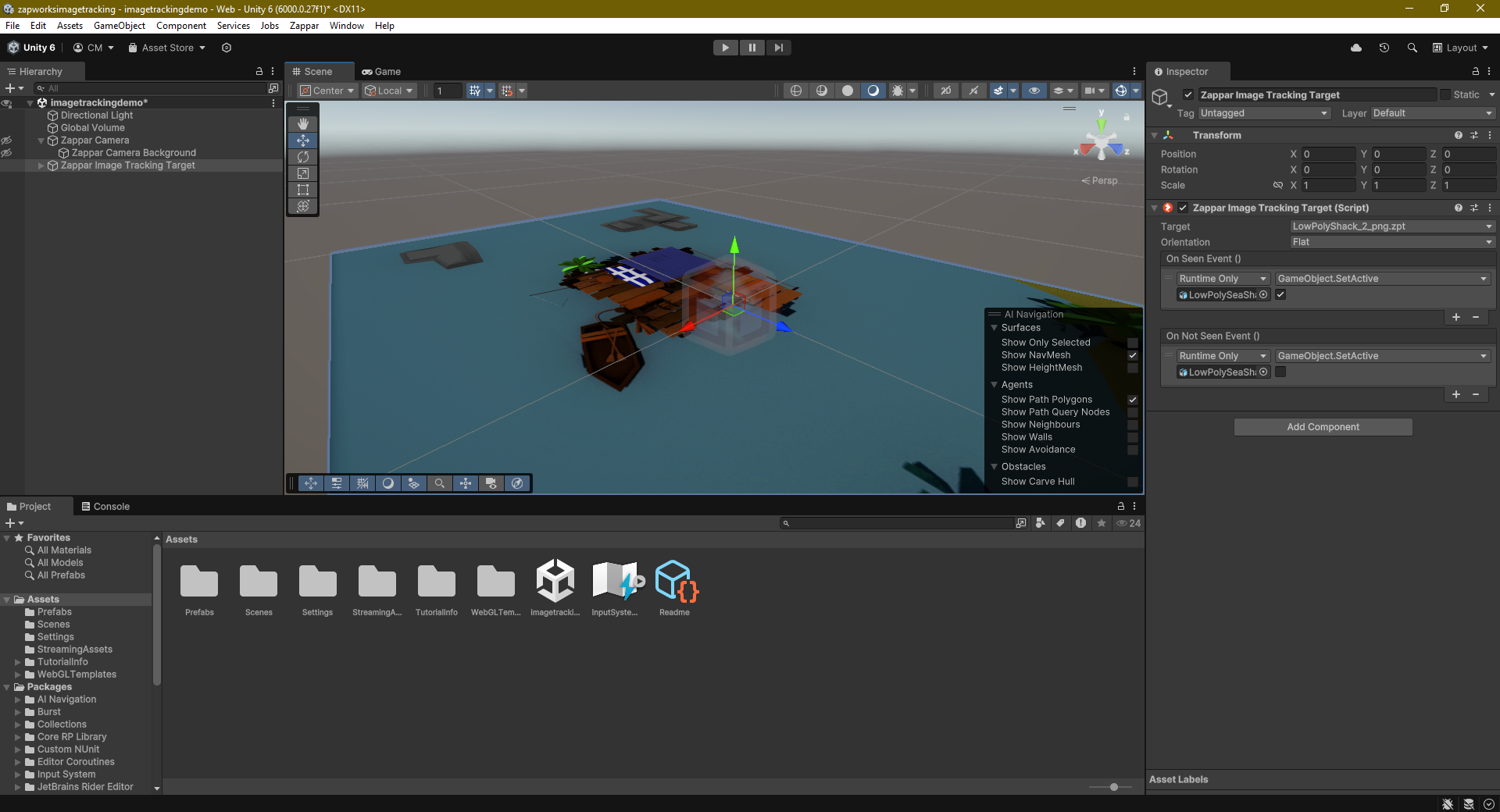
In this task, we worked on using Unity and Zapworks to create and implement image tracking to provide an AR experience to understand how the process works. This level of Extended Reality is a step up from 360 imaging, with more focus on the importance of setting up files correctly. The problems arose with an issue downloading the Github file onto Unity, however once into the workflow it was impressive to see the application under the hood. Understanding the basic concept of the process allowed me to figure it out in a slow process. This unique way of combining 2D and 3D imaging into an interactive design was a very eye opening experience. During my experience I had issues with the publishing of the QR code imaging which provided a disappointing viewing of the result.
Screensht of the workflow mid process, and showing the Unity interface
With the complexity of this process came the discussion of how the user experience is, when it comes to design, especially in digital formats user experience is a recurring factor that needs to be consistently thought about. We need to consider if the overall satisfaction was delivered to the user, we can do that by considering the practical uses of this feature outside of novelty. With that also comes consideration into the accessibility of this feature. Through this system using Zapworks, you are led from your camera to multiple browsers before realising the final view. Once adopted more into everyday use it will become a helpful tool in everyday life. In my mind, I consider industries benefiting massively are those that practise in practical trades, engineering, plumbing etc. enabling AR to help identify pipe networks or something similar could be a potential revolution, which just suggests the innovation that could be discovered.