Development Research Blog
This post will begin by discussing and observing the storyboard that has been designed and presented for this chosen topic; before being able to decide or plan anything around the conceptual design transition the idea needed to be formulated and finalised properly. To give a relatively brief overview, the structure of the planned animation is to begin opening on a book titled “Responsible Reading” in which the audience believes the setting of this animation will take place, as it opens up we see it begging to play out the story of an unnamed character progressing their way down a street while reading a series of books, the day and night cycle will continue in the background as a representation for the passing of time. While this character reads and moves through these different books, in the background the audience will see less and less trees and clouds appear to fill the backdrop implying a negative impact in correlation with the characters journey. The scene will move and the book will close, implying an end of story. The audience will be surprised as the book shifts into a tablet device and as the shot zooms into the video screen displayed on it it will move into a new shot that will replay the journey of the character at a much faster pace, while they are reading from an E-reader during this version. As this version of the journey plays out the audience will notice the environment does not change much implying a lesser impact on it.
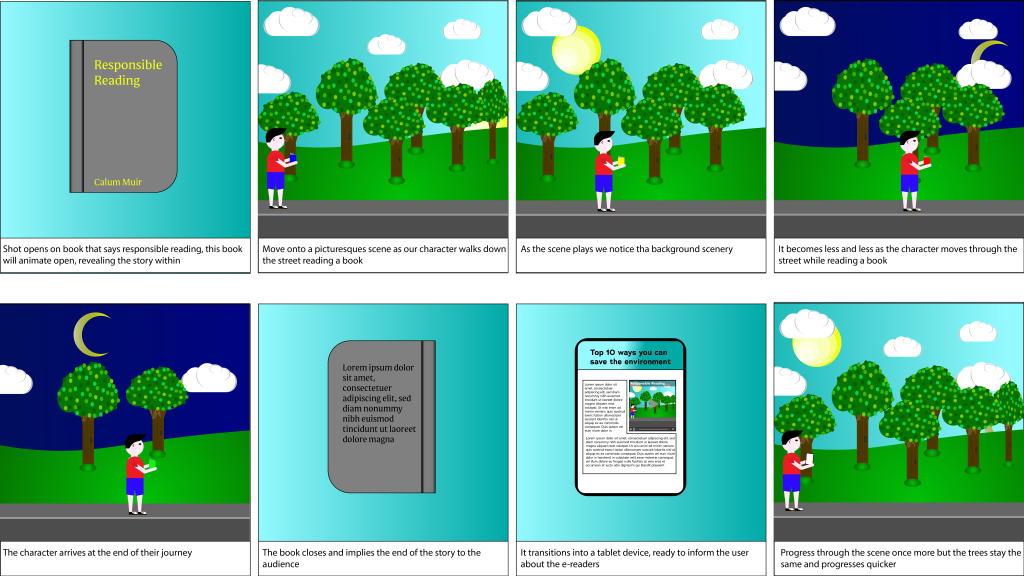
Discussing the conceptual design transition, the key focus was to figure out some way to connect two images in this animation that could incorporate a seamless transition that fit the narrative. Overall, it was a fairly easy process to come up with the design in this scenario, by utilising the similar shape of a book and an E-reader or tablet device, it became apparent to utilise this obvious structure. In a more in depth analysis of this, the decision became solidified when taking the approach of “moving forward” with technology, by closing the book it is the author’s intention to signal to the target audience (those who consume more than the average amount of books per year) that they should close the chapter on traditional paperback, and move to enjoying their hobby more responsibly and consider switching to using a digital format for the bulk of their reading habits. By choosing this decision for the transition it seems suitable to coerce and encourage the audience to transition into this new view point. This message is intended to be assisted by this transition and the cinematography of the rest of the animation itself, as a way to reinforce the direct purpose to the target audience